



With the surging popularity of 3G phones and devices, the mobile is now mainstream. In Australia, where adoption rates are high, there’s never been a better the time to include mobiles in your marketing mix.
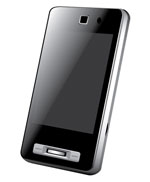
When Apple introduced the iPod in 2001, MP3 players had already existed for five years. But the iPod’s design and ease-of-use revolutionised the space, creating a swell in demand and bringing what had been a marginal technology to the masses.
Right now, the same thing is happening in the mobile space. Despite a relatively low market share, Apple’s iPhone—thanks to its ‘App Store’ and desktop-like internet browsing experience—has created a new awareness of the potentials of mobile technology while also bringing a huge number of new users to the space.
For businesses looking for innovative ways to connect and engage with customers, mobile technologies are presenting enormous opportunities. From the ability to link print and outdoor advertising campaigns to instantly accessible online content, to the ability to create custom applications that open new channels of communication with customers and clients, businesses prepared to take the mobile plunge are discovering real and sometimes unexpected benefits.
Australia’s position in the mobile space is unique. By international comparison, our network infrastructure is roughly in the middle of the road. We’re behind the blanket penetration of mobile internet devices in countries such as Japan or Korea, but at the same time we’re well ahead of most Western markets, including the United States.
Somewhere close to 25 percent of Australian users are currently on the 3G networks necessary to deliver the speeds required for rich content such as voice and video. The good news is that 3G’s reach and prevalence can only increase. Optus is in the process of a national network expansion which, in combination with Telstra’s established NextG network, means it’s not only metropolitan areas that will soon be 3G in the majority, but the regions as well.
To date, the major carriers have taken a ‘walled garden’ approach, using their 3G networks to deliver a raft of carrier specific services—from news, to movie times, to sports scores—without really encouraging 3G users to use their handsets to visit the wider web. With the introduction of the iPhone, this is changing. Following Apple’s lead, handset manufacturers are improving their web browsing experience, and there’s a shift away from the ‘walled garden’ approach to one emphasising the idea of ‘surfing as you please’.
This is great news for businesses. It means that—from newspapers to cinema chains to the local pizzeria—organisations are themselves delivering their own mobile content, independent of the telcos.
It’s all part of the convergence between the ‘mobile’ and the ‘general’ web: a distinction that’s quickly vanishing. Indeed, with so much now available from a mobile handse, from internet banking, to social networking sites such as Facebook, the difference between a phone and a laptop is increasingly negligible.
Just another channel
So, how should your business be approaching this new landscape?
While it’s no blank canvas, the mobile space is still developing. While it can at first seem daunting, the advantage of this state-of-play is that, with a little imagination, your business can create mobile content and mobile campaigns that are truly unique.
Whether it’s a mobile site which broadcasts video snippets, or interactive signage that reacts to SMS messages in real time, the possibilities are unlimited, and when executed correctly they can really set a business or a brand apart.
At the moment, most businesses who are active in the mobile space are using it as an adjunct element of their broader campaigns. This is a good idea. For most purposes, mobile is not yet mature enough to be a focal point for an entire campaign, and it’s a space best exploited as just one channel among many.
A common practice in more advanced markets that is catching on locally is the use of QR Codes. Similar to barcodes, these are small square matrices that can be added to printed material—anything from magazine ads, to billboards, to business cards—which create a bridge between that material and relevant mobile content. Users simply take a photo of the QR Code using their mobile handset to be automatically taken to the mobile element of the campaign. It’s the equivalent of a mobile ‘call to action’, with the advantage of being much quicker than remembering and keying in a traditional web address.
The beauty of the QR Code is that it takes a physical page from traditional media and links it to any part of your mobile campaign. One good practice is linking to a mobile ‘mini-site’, a small portal with simple functionality that draws together a campaign; from its key messages, to its visual collateral, to information on products. From a static piece of traditional media, this creates a two-way engagement that can be driven by the user, giving them an instantaneous means of getting information on the spot, without needing to write down or recall a web address later.
Film promoters especially have taken advantage of QR Codes to link magazine and outdoor advertisements, getting their audience jumping to video trailers, cast photography and session times. From stickers to beer coasters, half the fun of QR Codes can be finding new and innovative places to put them, so be sure to give this some thought when designing your campaign.
If you’re a promoting a brand, you might also consider ringtones and wallpapers that customers can use to personalise their mobiles. Thanks to its ‘replay’ value and engagement potential, mobile gaming is also a popular option for those seeking to create a brand experience.
Developing your own applications
For businesses looking to get seriously into the mobile space, another approach is to develop business or brand-specific mobile applications.
These are different to the mobile ‘mini-site’ approach in that they are small pieces of software which users download and run from their phones. Their disadvantage is that downloading and installing them does require some effort on the part of the customer. However, there’s plenty of evidence that—if you can offer something that your audience wants—they’ll happily go to the trouble.
The key is to provide the functionality that your customers need. The banks are early innovators in this space, creating iPhone applications that are amongst the most popular on Apple’s store.
If your business currently provides services to customers or clients via the web, these are often ideal first candidates to bring to the mobile space. Services that take advantage of handset capabilities are also likely to strike a chord. The GPS and mapping features of a growing number of mobile handsets, for example, can be used to create anything from store locators to order trackers.
Mobile tools for alerts and notifications will also open new channels of communication with your customers, and there’s also a growing body of evidence that by delivering a point of differentiation, the existence of such tools will also attract new customers. The Australian ISP Internode, for example, offers its subscribers mobile applications for checking their broadband usage, viewing network advisories and locating Wi-Fi hotspots. As a bonus, the customers most often attracted by such applications are the trendsetters who family and friends look to for advice.
First steps forward
When considering what mobile direction will best suit your business, there are few things to keep in mind. If you’re developing a specific campaign, the effectiveness of any mobile element is often determined by where it sits in the design process, and the earlier the better.
It’s also important to realise that mobile is still a specialist space. Of all marketing channels, mobile remains the most technically complex. The need to develop content and applications across a range of devices combined with the constant technological change that’s part and parcel of a developing area, means that your business will be best served by a specialist mobile agency. There’s a lot of room for error, and it’s important (from the point of view of both technology and strategy) to team up with people who know the terrain. Thankfully, in Australia, there’s no shortage of mobile agencies to help out.
Advertising in the mobile space
When it comes to advertising, the mobile space has a definite edge.
Studies show that ‘click-through’ rates for banner and text ads are higher on mobile platforms than in the general web space. One reason for this is that mobile displays are far less cluttered. Ads are fewer and more prominently integrated into the content, increasing their chance of being noticed.
A second reason is that mobile platforms are much more targetable. With the right intelligence, ads can be served to specific categories of users; those with specific devices or those on specific networks, for example.
Through specialist agencies such as the Admob, businesses can also promote their wares on popular mobile sites, and through ad-supported mobile applications as well. This can a powerful way to reach your audience. If you’re selling sporting equipment, for example, you can advertise through fitness and training programs.
A common misperception in the mobile space is that the audience is restricted to the Gen Y demographic. In fact, the mobile audience is made up of primarily ‘early adopters’ across all age groups; an audience that has added value because it sets the trends.
Another benefit of the online space is that it’s also more measurable. A plethora of tools and stats packages are available to track mobile campaign performance, often delivering metrics over and above what’s available for regular online campaigns.
Riding on the wave of the iPhone’s success, mobile technologies are offering an increasing number of opportunities for businesses to reach out to existing and potential customers wherever they are.
While mobile is best considered as ‘just another channel’, it’s also one that presents unique possibilities for brands and businesses to set themselves apart, creating new dynamics for customer engagement in increasingly competitive markets.
—Simon Goodrich is MD of Portable Content (www.portablecontent.com) a Melbourne-based digital technology company.
People who read this, also liked:
Marketing online in a downturn
Seeking to promote your business? Create your free Australian business listing with Dynamic Search business directory – Sister site of Dynamic Business.
